
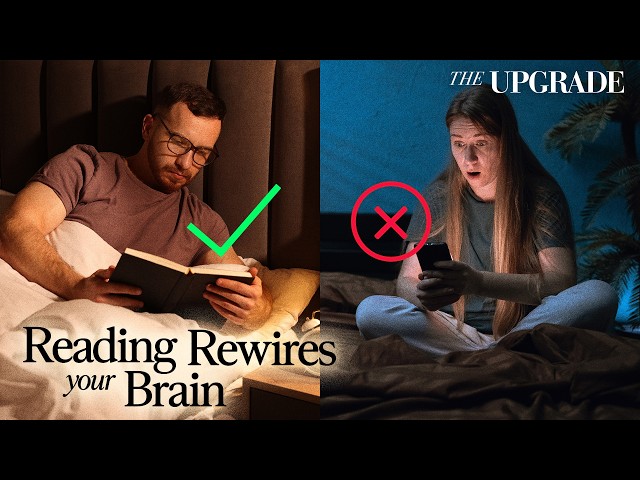
My Youtube algorithm gives me a lot of child literacy videos due to my research interests, and recently a video called, Why Your Brain Learns Better From Paper, came into my feed. (I’ve linked the video down below in case you want to watch it.) It immediately caught my attention with its Luddite headline.
The video was based on a large international study that examined children across dozens of countries, income levels, and family backgrounds. The researchers found that children who grew up in homes with just one physical book were nearly twice as likely to meet basic literacy and numeracy standards as children who grew up with no books at all (Evans et al., 2018).
When researchers looked at homes with more physical books, the effect scaled. Children surrounded by physical books completed an average of three additional years of education over their lifetime (Evans et al., 2010). That is the difference between a high school diploma and a college degree. It didn’t matter how poor or wealthy the family was, country location or parent education, and it didn’t matter if the children had access to computers or e-readers.
One physical book made that much difference.
How could the presence of one book matter so much when compared to so many other factors?The authors argue that books change the cognitive and social environment of a home. Books generate curiosity, show the child that learning is important, and create opportunities for social bonding between adults and children. Everything I strive to make this blog about. Even when books are not actively read every day, their presence reinforces language exposure and abstract thinking over time (Evans et al., 2018).
This blows my mind! I’ve always laughed at the joke that says reading books and buying books are two different hobbies. I am guilty on both counts. But, maybe there is some merit to having that massive TBR shelf silently judging you.
The implications of this study are hard to ignore. While it is excellent news, on one hand, because having one book is so easy for most people, it really begs the question about literacy interventions, specifically the promotion of technology in homes and classrooms and the push to decrease the technology divide in low-income schools and homes.
If there was no measurable advantage in literacy and education for the children who had the luxury of e-readers or computers/smart devices in the home, what is the deeper relationship between technology and reading print that we are missing?
Is our well-meaning desire for educational equity going in the wrong direction? Does the brain process reading on devices and print differently? How much is the tech helping or is it making learning harder for children?
I am going to write a part 2 to this blog to look at the research and see if we can figure out why the e-readers and screens didn’t offer any measurable advantage.
The video, Why Your Brain Learns Better From Paper from the Youtube channel The Upgrade with Makai Allbert

References:
Evans, M. D. R., Kelley, J., & Sikora, J. (2018). The importance of books in the home for children’s educational outcomes. Journal of Global Health, 9(1), 010403. https://doi.org/10.7189/jogh.09.010403
Evans, M. D. R., Kelley, J., Sikora, J., & Treiman, D. J. (2010). Family scholarly culture and educational success: Books and schooling in 27 nations. Research in Social Stratification and Mobility, 28(2), 171–197. https://doi.org/10.1016/j.rssm.2010.01.002