AI.
I think most of us have had some fun with AI tools at some point over the last few years. In 2024, I was quite fascinated with, and naive about, AI and I enjoyed learning about it. It is, understandably, a very divisive topic, especially among writers and illustrators. There are so many reasons to limit AI use and I can't cover them all in one blog, so I will do this as a 2-part post to keep it manageable.
Most modern creatives, especially writers, have a deep fear of being accused of using AI. Some writers, myself included, are now overthinking their natural writing style because it has some of the tell-tale flags of AI writing. Over the course of two graduate degrees, I have spent a lot of time in academia. Reading academic papers, writing research papers and essays was a weekly task for almost a decade, so I am sure it would be easy to look at my blog entries and think they could be AI considering their formal tone. But it wouldn’t be true. I love research (my undergrad is Journalism) and writing academic-themed essays was not only the day-to-day reality for me, but it is my preferred method of communicating about subjects that are deeply important to me. Having AI do this would take all the fun out of it for me.
I sometimes use headers in more formal work because, as my senior year journalism professor stated, 'brevity is not your strength,' and if I didn't use headers, the information would get lost in the volume of text I often write. The eye needs something to break up the text monotony.
The Infamous Em Dash
The em dash has been around since the 1400's and has been heavily used in writing since, which is why AI is obsessed with it. You will have to pry the em dash from my cold, dead hands because I will not stop using it. No matter how much someone points a finger at me and screams “AI,” the em dash is here to stay. I love the em dash and even use it in text messages (long hold on the hyphen and you should get an 'en dash' and an 'em dash' option). The reason people think this is an AI'ism is that the average, everyday American, who doesn't write for a living, doesn't even know how to form an em dash on their keyboard. Writers use them every day. If you are seeing them in social media posts, it probably is an AI cut and paste. But, please, when it comes to writers, lower the pitch-forks and torches because, I assure you, you don't want writers to stop using the em dash.
I hate that writers feel the need to defend themselves for doing what they've always done or even consider writing differently just to try to not look AI. We are now gaslighting ourselves and doubting what we know and even losing touch with our unique styles out of fear.
I also hate that it has to be said so bluntly, but I have no problem in doing so—I write my own work! (yes, even the sentences with em dashes). Whether it is the books I write or the blogs I post, they are my own ideas, thoughts, sentences, words, etc. I even draft my books by hand in an old school notebook.
Human Authored Certification
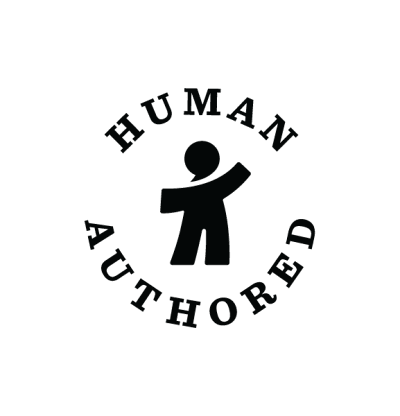
All my books are registered with the Authors Guild Human Writer Licensing Program and each have a unique registration number. If you are looking for books that are licensed and registered as 'human authored' look for this symbol specifically, as it is trademark protected and carries a legal license. This legal licensing program is now available to all traditional publishing houses and Indie authors who can meet the "Human Authored" requirements. The book will have this stamp on the front or back cover OR the Human Authored registration number on their copyright page as many authors can not redo covers to add it to already published work. If there is 'human authored' language on the copyright page there must be a registration number with it or it is not legitimate.
It's sad that we are here as a profession, and it feels lame to have to defend yourself or ‘give an AI statement,’ but this is where we are in the world—writers going after other writers while the general public is being forced to read terrible AI slop everywhere they look.
However, my professional concerns about AI and the unnerving feeling that I need to defend my own work are secondary to my growing fears about what AI is doing to us on a psychological/emotional level, as a society, to our environment and in the way our brains function.
Part 2 will cover this in more detail.